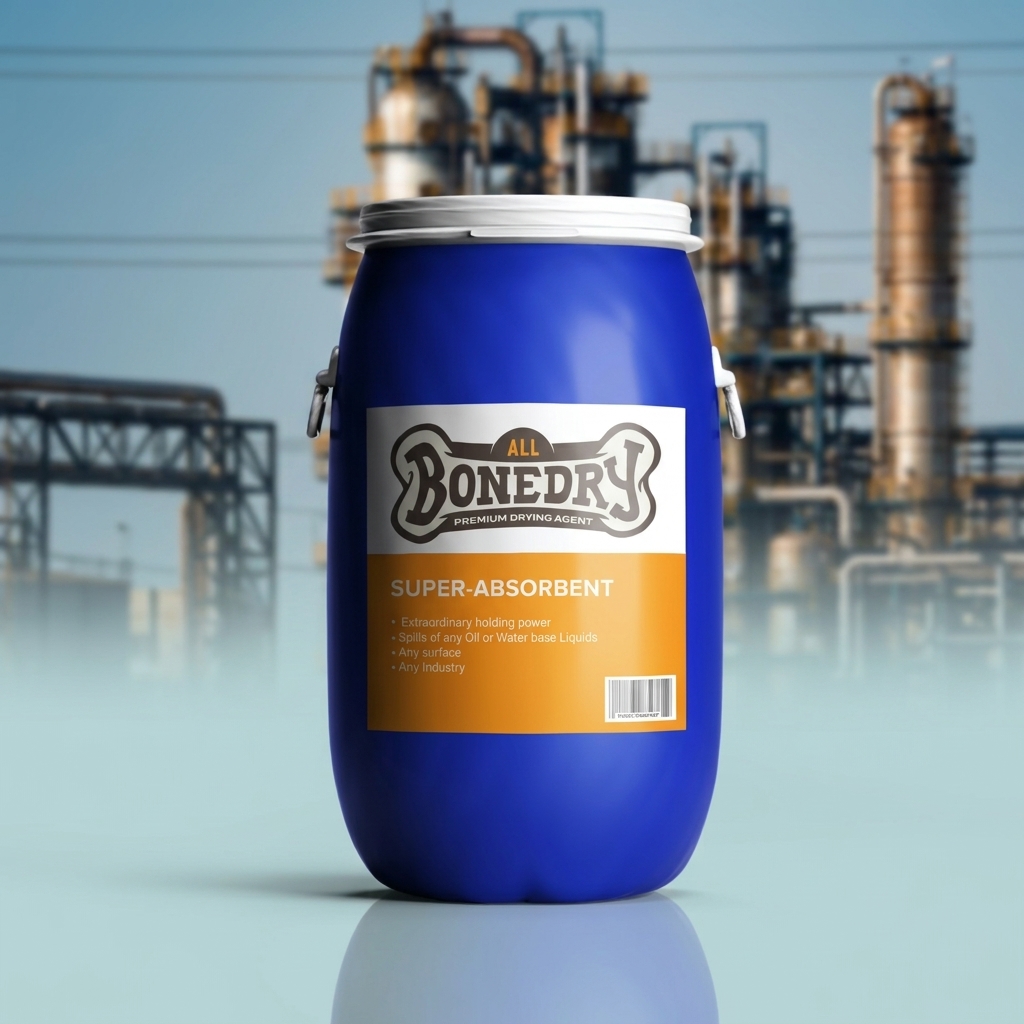

Clay has been the default absorbent for decades — but for hydrocarbon spills it's heavy, slow, and expensive to dispose of. Here's how to choose a better option.
When diesel, hydraulic fluid, or motor oil hits the ground, the absorbent you reach for determines how fast you're back to work, how much material you use, and how much you pay to haul the mess away. For decades the default has been clay — but clay is often the worst choice for hydrocarbon spills, and most crews don't realize how much it's costing them.
What to look for in a hydrocarbon absorbent
- Selectivity — a true hydrocarbon absorbent locks up oil and fuel while repelling water, so it keeps working in wet conditions and after rain instead of saturating with water.
- Encapsulation — products that encapsulate hydrocarbons reduce leaching, which matters for both safety and disposal classification.
- Weight — lighter absorbents mean less material used, less to carry, and far less disposal weight to haul away.
- Speed — the faster it works, the sooner the surface is safe and the crew is back on task.
Why clay quietly costs more
Clay is cheap by the bag, which is exactly why it's still everywhere. But it's heavy, it absorbs water indiscriminately, and it takes a lot of material to pick up a spill. That weight shows up again at the back end: you pay to haul and dispose of every pound, and saturated clay can be heavier than the spill itself. Add the labor time to spread, sweep, and bag it, and the 'cheap' option becomes the expensive one.
A lighter, hydrocarbon-selective approach
Purpose-built hydrocarbon absorbents like BoneDry are engineered to encapsulate oil, diesel, and fuel on contact while repelling water — and they can be up to five times lighter than clay. In practice that means crews use less material, spend less time on cleanup, and haul away far less disposal weight, often cutting the cost per incident by roughly half. Because it floats on water and absorbs only hydrocarbons, it's also effective for surface recovery on wet sites and water-adjacent operations.
Match the product to the spill
There's no single 'best' absorbent for every situation — the right choice depends on what you're cleaning up, the surface, and how often it happens. General oil- or water-based spills, hydrocarbon-only cleanup in wet environments, drilling cuttings, and caustic or biofluid spills all call for slightly different formulations. The key is qualifying the liquid, the surface, and your disposal path before you standardize on a product.
The bottom line
If your crews are still defaulting to clay for fuel and oil spills, it's worth running the real numbers — material used, labor, and disposal weight — against a hydrocarbon-selective absorbent. Most operations are surprised by the difference. Reach out and we'll help you match the right absorbent to the spills you actually see.